A National Story, Told 25 Local Ways
In order to do this, rather than pitching one single angle, we built the campaign around the women themselves. We focused on the home town of each of the 25 women mentioned in the text and used this to pitch their story to their individual regional stations.
Giving Every Region Its Own Local Figure
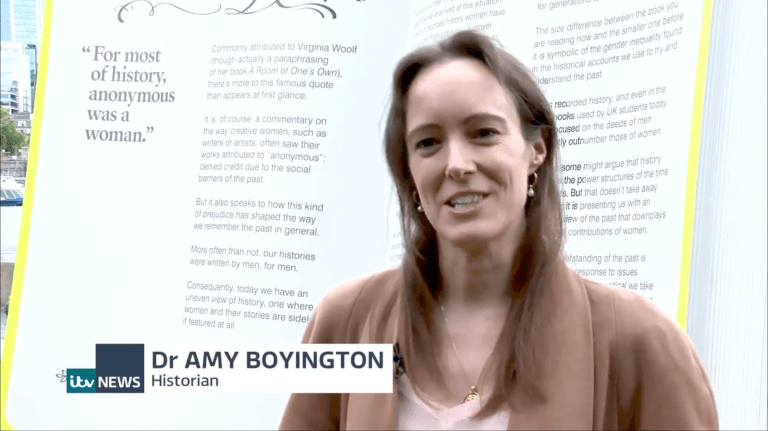
The approach was a success: stations messaged back asking to talk about the women connected to their own area. Dr Amy Boyington, historian and creator of the Parity Principle, was briefed to focus each conversation on the woman that station had asked for. She was joined for a number of these interviews by Dr Jennifer Doyle, Family History Expert at Ancestry, who brought the genealogy angle to listeners.
One Shoot, Six Regional Stories
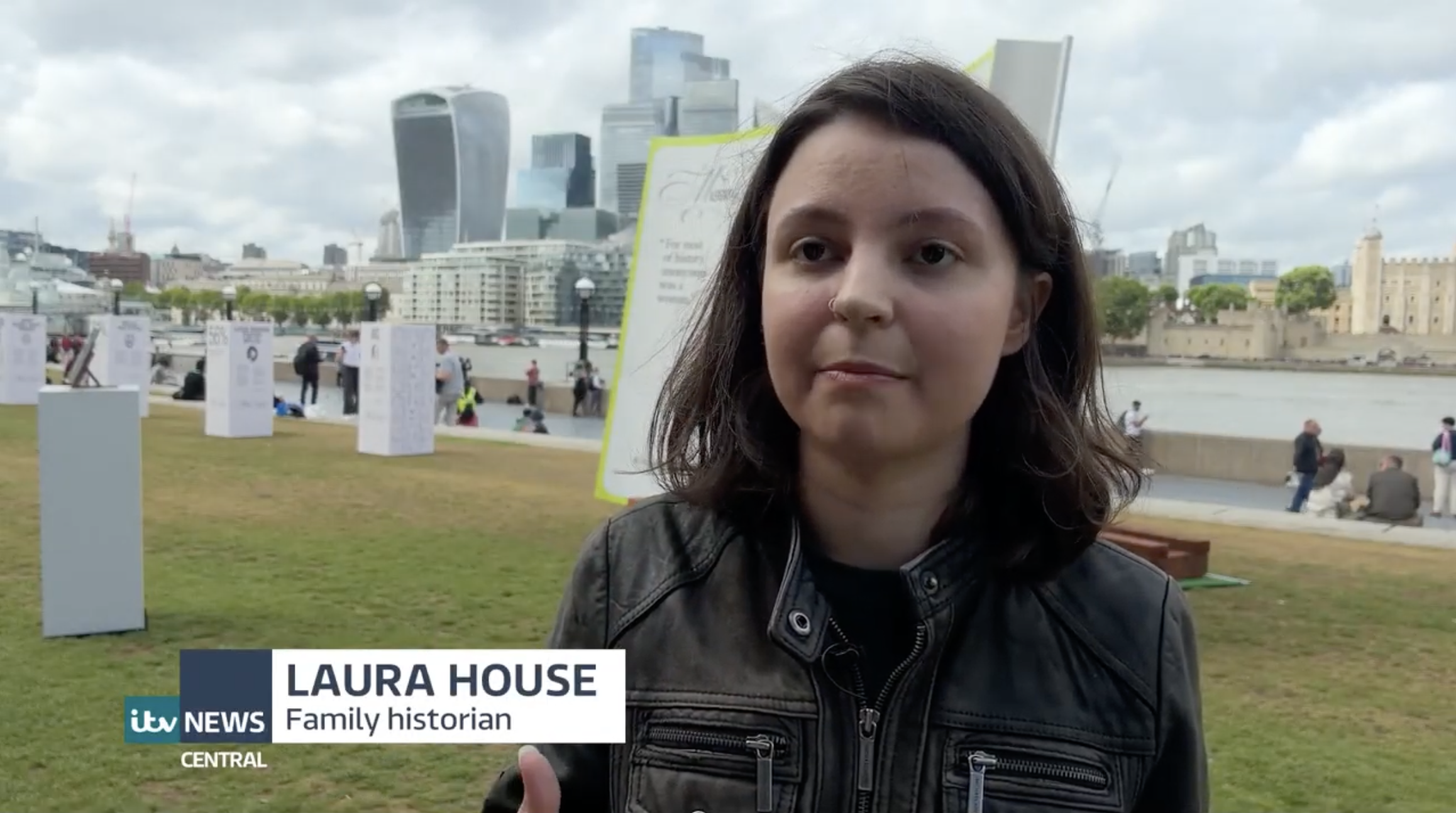
We secured shared content across six regions for ITV. On launch day at Potters Field Park, we worked alongside the client to film Dr Amy Boyington discussing a different woman for each region, giving every version of the package its own locally relevant lead. Alongside Amy was Selina Vickers, great-grand niece of pioneering Edwardian physician Dr Annie Hyatt, who appeared on camera as a real descendant, bringing one of those forgotten stories to life.