
With August’s heatwave finally cooling off, we’re looking back at a Rajar Q2, a fair few shifts in how broadcast actually works and a masterclass in deflection. Here’s how the month looked:
Industry News
RAJAR Q2 2026: what the numbers actually mean for PR
The first RAJAR figures for Q2 landed this month, and it’s easy to skim past a release like this. A sea of numbers about stations and slots most people don’t listen to, and a quarterly update that on the surface doesn’t change all that much from the last one. But look past the noise and there’s a genuinely useful set of signals in there for anyone advising clients or spokespeople on broadcast.
The headline number is a record 51.1 million weekly listeners, 87% of the population, up around 2% year on year, with total listening hours climbing to 1.04 billion a week. Worth noting that the adult population base RAJAR measures against also grew this year, so some of that growth is simply more people to count rather than more people tuning in per head.
The more telling story is the widening gap between commercial and BBC radio. Commercial reach is now at 40.2 million against the BBC’s 30.9 million, with commercial holding 55.1% share against the BBC’s 42.6%. BBC listening hours are actually holding up reasonably well, so this reads more as a reach story than a listening time one.
Where that gap is opening fastest is instructive. GB News Radio grew by 34% to 731,000 and hours by 78%, with its breakfast show up over 70% year on year. LBC News hit a record 1.2 million. Times Radio hit its own record of 660,000, with hours up over 20%. The stations pulling ahead fastest are almost all built around debate, opinion and current affairs, not music. KISS had a strong quarter too, adding significant reach on the back of new breakfast hosts Tyler West and Chloe Burrows, taking the full KISS Network to 3.7 million.
Scotland got its first digital only entrant this quarter, with STV Radio launching to 139,000 reach. Early days, and awareness still lags well behind established players in the market, but it’s a solid opening figure for a new digital brand to post.
The audience that broadcast radio struggles to hold onto remains under 35s, whose reach continues to slide. The BBC’s response has been to bring in creators with existing digital followings rather than trained broadcasters, GK Barry joining Radio 1 this autumn being the clearest example. Whether that shifts the numbers meaningfully is worth watching next quarter.
For PR, two things are worth taking from this. First, the stations growing fastest are the ones built for opinion and debate, so a spokesperson who can hold a clear position, or say something a producer hasn’t heard put quite that way before, is what gets booked on them. Second, radio’s core audience remains solidly middle aged, and that’s not shifting quickly. The average listener sits around their late forties, which in practical terms means someone with real spending power and, often, a household of decisions to influence. That’s not a demographic to write off just because it isn’t the one everyone’s chasing online.
Channel 4 News creates a Head of Platforms
Channel 4 News has created a newsroom role that would have been difficult to imagine a decade ago: a senior editor whose job is not simply deciding what gets broadcast, but where journalism travels next.
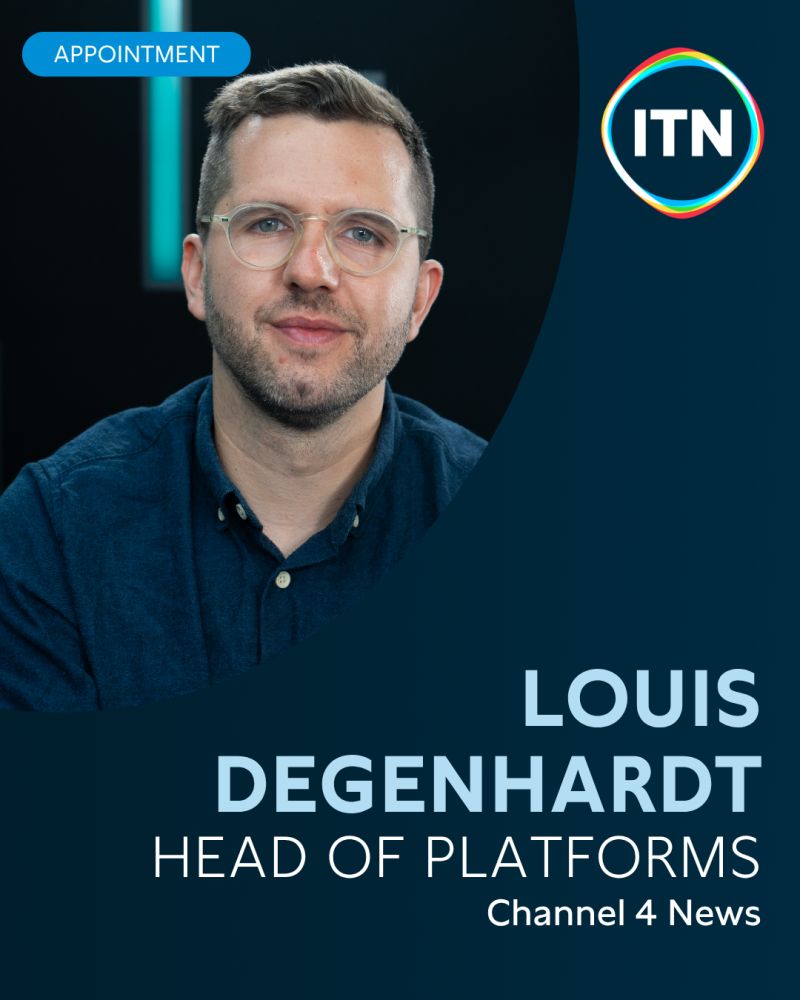
On the 4th of August, the broadcaster announced Louis Degenhardt as its first Head of Platforms. He joins from Global Media, where he was executive producer on The News Agents podcast, having previously held senior editorial roles at Sky News and BBC Newsnight. His background is significant. The person brought in to lead platform strategy comes from an audio first, digital environment rather than traditional television news, which says something about the skill set newsrooms now think this job requires.
This is significant not only because Channel 4 has hired a Head of Platforms. It’s the fact that platform strategy now sits inside the editorial process rather than after it. Of course journalism is still the product, but it no longer just comes out through one door.
For years, a successful news moment meant a strong interview on a flagship programme and solid overnight ratings. Increasingly, success looks like that same interview broken into the moment that actually “mattered”, and that moment finding an audience of its own. That changes the editorial mindset before a story even airs. What once used to only be: is this important enough for the bulletin? Will people watch at 7pm? There’s now a second set running in parallel: Does it have a strong opening ten seconds? Will people share it? Does it work without the twenty minutes of context around it? A Head of Platforms is essentially an acknowledgment that maybe some will watch the full programme, others will encounter a single clip first and decide whether they want to explore further.
The scale of engagement backs this up. BBC News’ TikTok feed saw content views more than double in the past year, reportedly passing 880 million in July. It’s tempting to read that as broadcasters losing ground to digital, but the opposite can be argued. A Channel 4 investigation or a BBC interview used to be limited to whoever was watching at the moment it aired. Now that same piece of journalism can reach younger audiences who never watch linear news at all, introduce a correspondent to a completely new audience, and pull people back towards the full programme it came from. The platforms that were supposed to undermine broadcasters are, in some ways, handing them a bigger potential audience than they’ve ever had.
It’s worth being precise about what’s actually driving this though. This isn’t newsrooms chasing virality. It’s newsrooms designed for discoverability, building stories that can be found and understood on their own terms, wherever an audience happens to be. Viral is the outcome you sometimes (and hopefully) get.
The BBC hires a Gen Z whisperer
If Channel 4 is thinking about where journalism travels once it leaves the newsroom, the BBC’s latest hire is aimed at a related but different problem: who isn’t watching it at all. The BBC has drafted in a 26 year old business prodigy and self-styled Gen Z whisperer to help it reach young audiences increasingly choosing content creators on YouTube and TikTok over traditional broadcasters. Brandon Relph joins as head of strategy, and has jokingly described himself as “the go to guy who knows the youth.” He founded his first company at 13 and made his first £10,000 before he turned 16, and has previously held the title of the UK’s youngest ever chief executive.
It’s easy to read this as a gimmick hire, but that’s not quite fair. Relph’s career genuinely is unusual for someone his age, and insiders have praised his focus on Gen Z since he started, describing him as popular with his teams and willing to politely question senior executives over their strategy despite his age. That’s a useful skill set inside an institution that badly needs to hear uncomfortable truths about how it’s perceived by anyone under 30.
But the more interesting read is what this hire says about where the BBC thinks its problem actually sits. Bringing in one person, however sharp, to represent an entire generation’s viewing habits was never going to fix a structural issue on its own. The real challenge is the same one running through the Channel 4 story above. Traditional distribution can’t reach an audience who have already moved on to platforms built around a completely different logic. A Head of Platforms role and now a strategist inside the BBC whose entire remit is a generation that barely watches live television. Broadcasters aren’t short of talent or ideas. They’re having to rebuild how those ideas reach anyone who isn’t already watching.

Who did Broadcast Good and who did Broadcast Bad
BROADCAST GOOD: Archie Goodburn
On BBC Breakfast this month, Scottish swimmer Archie Goodburn made a direct, tearful appeal to Andy Burnham. Goodburn, who competed at the Commonwealth Games in Glasgow two years after being diagnosed with three inoperable brain tumours, spoke about the shortfalls in the Rare Cancers Bill and called for a dedicated national brain cancer lead. It was personal, specific and the kind of interview that naturally invites attention beyond the programme itself.
The clip then travelled beyond the original broadcast audience, reaching Burnham himself on TikTok. Rather than responding through a traditional statement, in his influencer style, he replied underneath the video, thanking Goodburn for his advocacy and offering to meet him in person.
For PR, that is an interesting shift. The value of a broadcast appearance is no longer limited to the audience watching at the moment of transmission. The strongest moments can continue working afterwards, carrying a message into new audiences and conversations.
The lesson is not that every interview needs to go viral. It is that the best broadcast opportunities are built around something that can travel: a clear message, a human story or a memorable exchange that remains compelling outside the original programme.

HONOURABLE MENTION BROADCAST GOOD: Health Minister Chis Mcdonald and Nick Ferrari
Health minister Chris McDonald appeared on Nick Ferrari’s LBC breakfast show this month to discuss the government’s cost of living policies, including Labour’s plan to crack down on subscription traps. Ferrari, doing exactly what LBC does best, pressed him on something concrete: how much does a Netflix subscription actually cost? McDonald didn’t have the number. Instead of fumbling for one, he pivoted smoothly to talking about his hobby playing the cornet in a brass band.
It shouldn’t have worked. A minister failing to answer a basic, relatable question about household costs is normally a clip that writes its own headline. But the pivot was quick, disarming and genuinely funny, enough that Ferrari himself called it a masterclass in deflection.
There’s a useful media relations lesson here. When a difficult question can’t be answered cleanly, the instinct is often to stay on message. McDonald did the opposite. He moved to something personal and authentic, giving Ferrari something unexpected to react to and turning a potentially awkward exchange into a memorable one. In a media landscape where politicians are increasingly media trained to stay guarded and on script, that willingness to be genuinely himself on air is precisely what made it memorable rather than damaging.
It’s also a useful example of the dynamic covered in the RAJAR piece above. LBC’s growth is built around exactly this kind of moment: a host willing to press hard on a simple, relatable question and a guest who has to think on their feet in response. For PRs, the lesson isn’t to avoid difficult questions, but to think beyond the prepared line. The most effective broadcast answer isn’t always the one that sticks most rigidly to the message. Sometimes it’s the one that gives the presenter and audience something they didn’t expect.
BROADCAST BAD: John Partridge
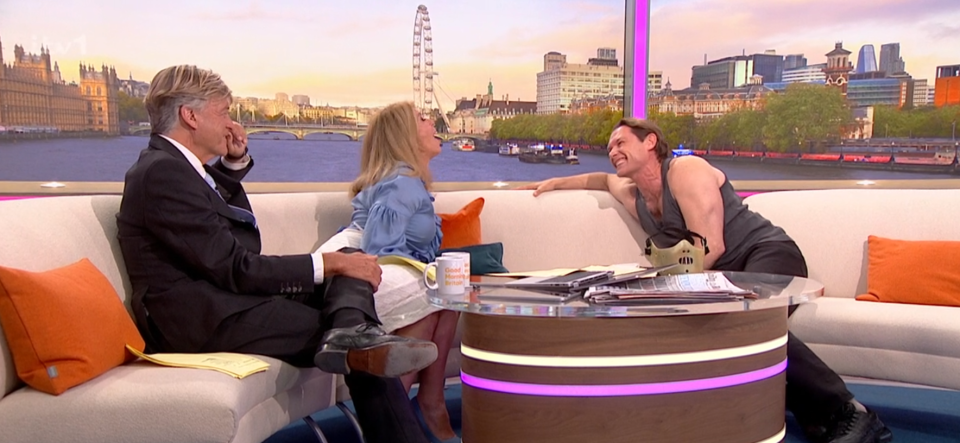
John Partridge’s Good Morning Britain appearance is a useful reminder that broadcast PR doesn’t depend solely on what is said – but also on how you present yourself.
He was there to promote his new role as Hannibal Lecter in The Silence of the Lambs, and the interview itself did what it needed to do. Partridge was engaging and talked confidently about the production. Yet the coverage that followed missed the point entirely, distracted by one simple factor: his choice to wear a tank top.
That matters because television asks a spokesperson to communicate on two levels at once. What they say is one message. What they look like is another. And the second doesn’t disappear simply because the first has been carefully rehearsed.
Whatever the intention behind the outfit, it gave the audience something to talk about that had nothing to do with the role he was there to promote. That isn’t an argument for dressing every spokesperson in a suit. It’s a reminder that presentation is part of the communication strategy on television. Clothes, setting, body language and even the dynamic between a guest and presenter all contribute to how an appearance is received.
For PR teams, that makes “are the talking points ready?” only half the preparation. The better question is “what will the audience remember when the interview is over?” If the answer isn’t the thing you came to promote, the broadcast has done its job rather differently from how you intended.
LOOKING AHEAD: September
September marks the return of kids back to school, meaning a brief break for parents before routine kicks in. It is also packed with important dates that you should know before it all gets hectic:
The month starts with Suicide Prevention Day on the 10th of September.
This is followed by party conference season, and this year all three main conferences land inside a span of four weeks. Reform kicks things off from the 3rd to the 5th in Birmingham, the Liberal Democrats follow from the 19th to the 22nd in Brighton, and Labour close out the month in Liverpool from the 27th to the 30th.
Finally, the 26th marks 20 years since Facebook opened up beyond college campuses to anyone with an email address.