

An award nomination. A new BBC boss inheriting chaos, a future king on breakfast radio, a station that killed off his father, and a man who went for a job interview and ended up on live television. Here’s how the month looked.
BF MEDIA’S NEWS
Last month we picked up our first ever Agency of the Year Award gong at the PRmoment Awards, and this month we’ve been nominated for Small Consultancy of the Year at the PRCA Dare Awards.
Looking forward to mixing clients, friends and peers on the 11th of June.

INDUSTRY NEWS
The world of broadcast did not take a break this month, with something happening every other day making it hard to keep up. But in case you missed it, these are the biggies that happened in May: The Q1 RAJAR results also landed on 14 May
The headline is simple. 50.6 million adults tune into radio every week. That is 87% of the UK population. Despite everything streaming, podcasts and on demand audio have thrown at it, radio is not going anywhere.
But the detail is where it gets genuinely interesting. Commercial radio extended its lead over the BBC this quarter, reaching 39.2 million listeners compared to the BBC’s 31.4 million. LBC hit a record 3.6 million listeners, its highest ever audience. GB News Radio grew 21% year on year to 676,000 listeners, overtaking Times Radio and Talk. Meanwhile BBC Radio 1 was down 4%, Radio 2 down 4% and Radio 4 down 2%. The BBC is holding its overall reach but losing ground in the spaces where opinion and news are growing fastest.
Digital listening hit a record 76% of all listening hours. Smart speakers now account for nearly 1 in 5 of all radio listening. AM and FM are at their lowest ever share. The way people are listening is changing rapidly even if the fact of listening is not.
The context matters too. January to March was not a quiet news quarter. Protests in Iran, US and Israeli strikes on Tehran, the Strait of Hormuz shutting down, Trump’s tariffs, and Labour in freefall at home. Opinion and speech radio does not just survive a heavy news quarter. It feeds on one.
What does all of this mean for PRs and which audiences are actually on the other end of those figures? Our founder Safi had some thoughts on that. You can read them here: https://www.linkedin.com/posts/safi-zisman-5aa21929_my-thoughts-on-the-latest-quarterly-rajar-share-7460627806440423424-9z9f/?utm_source=share&utm_medium=member_desktop&rcm=ACoAADnXVFMBnuRgxoC1d4DleQPmMpkDJSf_jTQ
Matt Brittin walked through the door at the BBC on 18 May
Matt Brittin has taken his seat this month as the new Director General of the BBC, first thing on his inbox is almost £600 million in cuts and potentially 2,000 people losing their jobs. He has also inherited a $10 billion lawsuit by none other than Donald Trump. And on top of that, a charter renewal negotiation coming up in December 2027. Easy to say we wouldn’t want to be him right now.
His first statement was made through an internal memo: “tough choices are unavoidable”. And he followed his second day, by informing his staff that he wanted to use data to build a “sat nav around bias” – in basic terms: he wants to use technology to analyse the BBC’s output, track which words get used, which types of contributors appear across programming, and identify patterns that could indicate bias before it becomes a problem. That Google mindset is already showing.
Also on the 18th of May, two stories landed that are worth holding up against everything written above
BBC One’s Panorama, titled The Dark Side of Married at First Sight, revealed that two women who appeared on Married at First Sight UK alleged they were raped by their on screen husbands. A third alleged a non consensual sexual act. One told the BBC she had reported the alleged rape to both Channel 4 and the production company before her episodes aired. They went ahead anyway. Channel 4 pulled all previous seasons from its platforms and commissioned an external review.
Separately, two Kurdish reporters spent months undercover exposing a criminal network operating in plain sight on High Streets across Britain, from Dundee to south Devon. More than 100 businesses, fake company directors, asylum seekers working 14 hour shifts for as little as £4 an hour. The Home Secretary responded on the day. The Home Office launched an urgent investigation. Three arrests followed. A dedicated crime unit was created to target the issue.
At a time when everyone is questioning the value of the licence fee. These are two great examples of how the BBC can offer more than just your saturday night TV and nice dramas, it can also offer genuine investigative journalism, from criminal networks to even going after another broadcaster, that can bring about change.

WHO DID BROADCAST GOOD AND WHO DID BROADCAST BAD
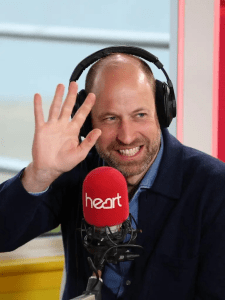
Prince William Heart Breakfast
On the 22nd of May, Prince William sat down with Jamie Theakston and Amanda Holden on Heart Breakfast, live from the Isles of Scilly. Never done before: a future king appearing on a live commercial breakfast show. And after giving it a listen ourselves, we have to say, he played it really well.
The topics covered told a story of their own. School runs, Aston Villa, Taylor Swift concerts with the kids, a devoted husband who says he couldn’t cope without his wife. A man who takes his family to the coast for quiet weekends and gets tested on the correct way to eat a scone. The image being constructed was deliberate and consistent: a normal bloke who happens to be heir to the throne.
The coverage that followed was exactly what his team would have hoped for. The magazine Women and Home led with his words about Kate. The school run story about bribing the kids with jam sandwiches travelled everywhere. While also promoting his visits to the Scilly hospital. Great PR for the Prince.
Of course, the small print is worth noting. He didn’t spend the entire Taylor Swift concert elbowing other parents in the crowd, but in their own private booth at the O2 and followed by a private meet and greet with the singer. The quiet house on the coast? a duchy estate. Yeah he has a favourite football team, but he has their phone numbers… You do not.
With Heart Breakfast reaching 12.5 million listeners a week, where the conversation won’t turn sideways on the second half of the interview, it was the right room for the story his team wanted to tell. And with Prince Andrew’s arrest still fresh in the headlines, the timing of a warm, human, controversy-free appearance was not accidental.
Great broadcast PR. Expertly executed.
Radio Caroline and the King Who Wasn’t Dead
Not all royals had the same lucky strike… some were struck down.
On the 19th of May, Radio Caroline interrupted its afternoon schedule to announce that King Charles III had died. He had not. He was in Northern Ireland with Queen Camilla, watching an Irish folk performance.
A computer error had accidentally triggered the station’s “Death of a Monarch” protocol. The announcement played out in full, the station fell silent as required, and it was only the silence itself that alerted the team something had gone wrong. They restored programming and apologised on air. Station manager Peter Moore posted a statement on Facebook: “We apologise to His Majesty the King and to our listeners for any distress caused.”
It seems fitting, after the success of Prince William’s radio appearance, for his father had been killed off by an Essex radio station only days prior.
You can watch here: https://www.youtube.com/watch?v=SXwQG7pFt7Q
Good? Bad? We genuinely don’t know: Guy Goma, 20 Years On
And of course we couldn’t let May pass and not talk about one of our favourite broadcast moments.
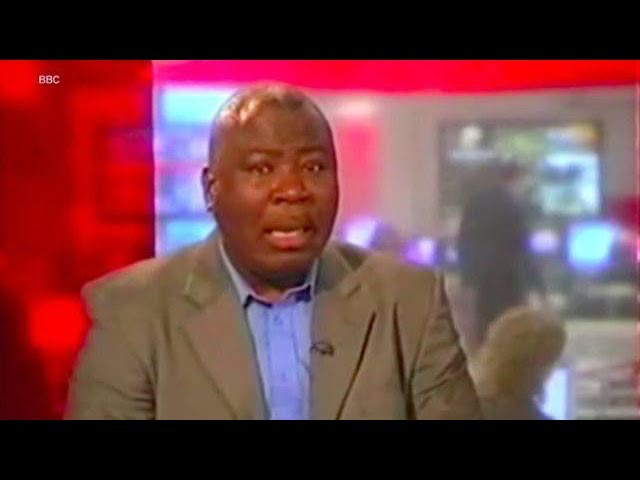
Guy Goma arrived at BBC Television Centre in May 2006 for a job interview. He was applying for a data support cleanser role in the IT department.
Next thing he knew, he willingly walked to what he thought was the next part of his interview, in front of all the cameras ready for his time on air.
When presenter Karen Bowerman introduced him on live television as internet expert Guy Kewney, the realisation crossed his face in real time. And then, rather than cause a scene, he answered the questions as best he could. On Apple’s legal dispute with the Beatles’ record label. Live. On national television. Having applied to a job only 40 minutes earlier.
It’s been twenty years since that iconic moment, and Guy Goma (not Kewney), was asked to appear on LBC, This Morning and CBS Evening News, where he said the lesson he took from the situation was “Be calm, try to solve the issue and move on”.
Taking into consideration we are still talking about it 20 years later, the “moving on” seems doubtful.
 LOOKING AHEAD: June
And just like that, it’s finally summer. With the heat (and sometimes rain) comes a plethora of sporting events PR’s can piggyback on. The FIFA World Cup kicks off on the 11th, Royal Ascot runs from the 16th to the 20th, together with the US Open starting the 18th and ending on the 21st. Everything wraps up with Wimbledon on the 29th.
But make sure to remember King Charles’s birthday parade, Trooping the Colour, takes place on the 13th.