

March. The end of Q1, a new BBC Director General, the long awaited arrival of SNL UK, and some news of our own we’re really proud of. There was plenty to talk about. Here’s how the month looked.
BF MEDIA’S NEWS
BF Media is a finalist in the Micro Agency of the Year category at the PRmoment Awards 2026. Quietly thrilled doesn’t quite cover it.
In this industry it’s easy to always be looking ahead at what needs to be done next. This felt like a good moment to stop and appreciate how far we’ve come. It’s nice to see our work and growth recognised, and nicer still to get dressed up and celebrate it with the rest of the industry. Fingers crossed.

CLIENT WORK
We’re closing Q1 with 663 pieces of coverage across January, February and March combined, and we’re proud of every single one.
It’s been a packed few months. Lucky Saint on BBC Breakfast, making the case for alcohol-free beer rewriting the economics of Dry January. Gousto landing in the right conversations as people reconsidered their weekly food habits. Ancestry using International Women’s Day to spark the conversations between women and the matriarchs in their family that had never been asked before.
And that’s Q1. Let’s see what’s next.
INDUSTRY NEWS
On the 25th of March the BBC confirmed what the industry had been whispering for weeks, Matt Brittin, formerly President of Google EMEA, will become the corporation’s 18th Director General, taking up the post on 18th May.
Brittin spent almost two decades at Google, becoming the company’s president for Europe, the Middle East and Africa. He has no direct background in broadcasting or journalism. And that is, depending on who you ask, either exactly the problem or precisely the point.
The BBC’s past five director generals all had news or at least media experience before taking the job. Brittin breaks that run entirely. Reports suggest his appointment stems from his expertise in big tech, in a media landscape where platforms like Google-owned YouTube increasingly dominate.
He walks into the role at an extraordinarily difficult moment. The BBC faces a $10 billion lawsuit from US President Donald Trump, a once-a-decade charter renewal, and a steady exodus of top talent. His predecessor Tim Davie resigned in November following controversy over a Panorama documentary that misrepresented a Trump speech, an editorial failure that also claimed the head of BBC News, Deborah Turness. And as we write, Radio 2 breakfast presenter Scott Mills has just been fired from the BBC following allegations about his personal conduct. His sacking comes after a string of incidents involving current and former BBC stars including Gregg Wallace, Gary Lineker and Huw Edwards. Nobody knows the full story yet, but with a new Director General about to walk through the door, the timing could not be more uncomfortable.
Brittin will need to rebuild editorial leadership, stabilise the organisation, and lead the BBC into its next charter renewal, when the future of the licence fee and how the corporation is funded will be negotiated with government.
For the broadcast world, the appointment is genuinely interesting. The argument for Brittin is that the BBC needs someone who understands where audiences actually are, how platforms work, and how to lead an organisation through technological transformation. The argument against is that public trust in the BBC is built on editorial credibility, and that credibility needs someone at the top who instinctively understands journalism, not just distribution.
The BBC’s appointment of a tech executive rather than someone with TV production and broadcasting experience marks a clear shift for the corporation.
WHO DID BROADCAST GOOD AND WHO DID BROADCAST BAD
Channel 4
On 3rd March, Channel 4 did something that looked like generosity but was actually a very smart use of communications.
They relaunched its B Corp competition, offering £600,000 in free TV advertising airtime to five sustainable businesses. Five small companies that would never ordinarily be able to afford a national TV campaign got one. Good story. But that’s not the interesting bit.
The interesting bit is what Channel 4 got out of it. Broadcasters are under constant pressure to justify the relevance of linear TV advertising at a time when budgets are flowing towards digital. Last year’s competition winners saw 88 per cent of exposed viewers report an improved opinion of B Corp brands, with each business seeing increased traffic and growth as a result. That data doesn’t just help the winners. It becomes a case study Channel 4 can use with every other advertiser sitting on the fence.
They ran a competition that generated goodwill, press coverage, and a live proof point for the power of TV advertising, all at the same time. That’s not philanthropy. That’s PR doing several jobs at once.
SNL UK
To be fair to them, they were always going to have a rough time of it.
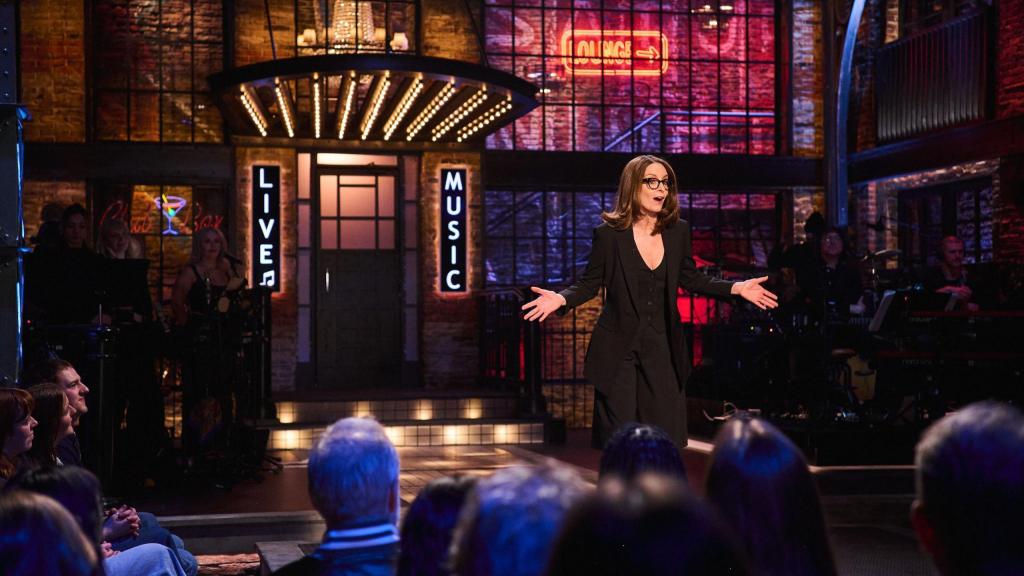
SNL UK launched on Sky One on the 21st March, fifty years after the original debuted in the US, and it didn’t exactly glide onto our screens. The show almost began in chaotic fashion, as a Leeds United-Brentford Premier League match running deep into injury time meant Sky only just cut over in time to hit the billed 10pm slot.
When it did get going, the reviews were mixed at best. Deadline called it “a laughter-free yawn,” while The Times concluded “Britain is funny but this isn’t yet.” Even Tina Fey, drafted in as the first host, seemed to acknowledge the awkwardness. When asked why an American was fronting the first ever SNL UK, her answer was: “None of you f*ckers would do it.”
Then the second episode happened. Mid-Jamie Dornan monologue, the video froze for viewers watching on Sky One, while those on NOW were shown a technical difficulties slide, with no indication that anyone at the studio even knew something had gone wrong.
For a show whose entire identity is built on the thrill of live television, that’s a painful irony. Live TV is supposed to be the point. The risk is the point. When the risk becomes a frozen screen and a technical difficulties slide, you’ve rather undermined the whole pitch.
It could still find its feet. Most SNL watchers will tell you the first series is never the best. But as debuts go, it was a lot to recover from.
LOOKING AHEAD: APRIL
April arrives with a double bank holiday and a packed broadcast calendar. The Grand National. The Boat Race. The London Marathon. Tim Davie’s last day at the BBC. A lot to analyse, discuss and hopefully announce. We’ll see you next month.