
And just like that, April has passed in a blink of an eye. An award win, a new Ofcom chair, and a viral Bible. Here’s how the month looked.
BF MEDIA’S NEWS
PRmoment Awards
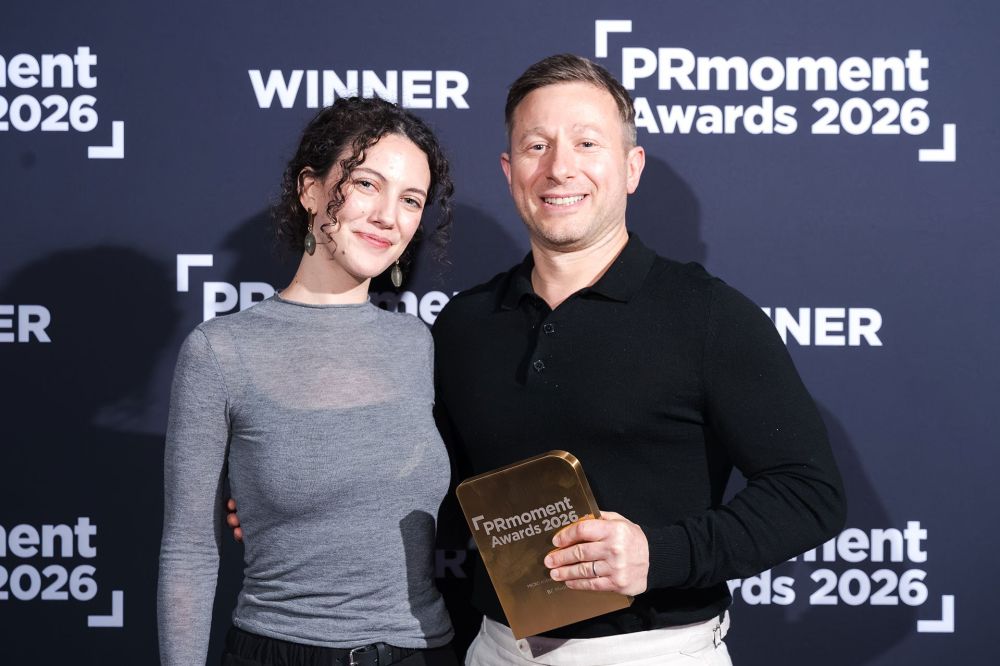
In last month’s BF Monthly, we were quietly thrilled to share that we had been named finalists for the PRmoment Awards 2026. This month, we get to say something even better. We won. Micro Agency of the Year.
We couldn’t be happier. It was a great night and a brilliant recognition of everything BF Media has put in throughout the past five and a half years. A night to celebrate the incredible work this industry delivers, and a night to celebrate everyone who has been part of our journey. It was an honour having that recognised.

Our website
It’s been a long time coming but we are excited to announce the final revamp of our website! We’ve put a lot of thought into how we wanted it to look and how practical we wanted it to be, but anyone can now go and check out our work, vlog and services in the link below.
End of probation
After what’s felt like a very short three months, we couldn’t be happier to announce that Olivia Lynn (Marketing Executive) has passed her probation and will be staying with us full time. Since joining she has been hands-on across outreach, content and the day to day running of the agency. She will continue to lead on BF Media’s own promotional content as we head into what promises to be a very busy summer.
You can read Olivia’s own thoughts on this:
INDUSTRY NEWS
April brought a significant moment for UK media regulation. Sir Ian Cheshire was named as the government’s preferred candidate to become the new chair of Ofcom, succeeding Lord Grade as his four-year term comes to an end this month. While appointments of this kind can often pass quietly, this one lands at a time when the relationship between broadcasters, platforms and regulators is being fundamentally reshaped.
Cheshire brings an unconventional background to the role. A former chief executive of Kingfisher, the parent company of B&Q, he also served as chair of Channel 4 until last year. He is not a broadcaster by trade, and his appointment mirrors the BBC’s decision to appoint Matt Brittin, formerly of Google, as its next Director General. Two of the most influential figures in British broadcasting are now coming from outside the traditional media establishment, signalling a preference for commercial, digital and transformation-led leadership.
For those working in broadcast communications, that shift is highly significant. Ofcom is no longer simply the body that oversees television and radio standards. Under the Online Safety Act, it has expanded into one of the most powerful digital regulators in the world, with responsibility spanning content standards, platform accountability, audience protection, competition issues and the behaviour of major social media companies. Its decisions will increasingly shape how broadcasters promote content, how platforms distribute news and entertainment, and how media brands build trust with audiences.
Whoever chairs Ofcom therefore sets more than policy. They help establish the regulatory mood music for the sector: how robust enforcement will be, how innovation is balanced with consumer protection, and how traditional broadcasters are supported as they compete in an increasingly global market. For broadcasters, streamers and platforms alike, decisions on compliance, discoverability, reputation and commercial risk will increasingly be shaped through Ofcom’s lens.
Cheshire’s appointment is still subject to parliamentary scrutiny, but if confirmed he steps into the role at a pivotal moment. BBC Charter renewal is approaching, the future of public service broadcasting remains under debate, advertising markets are under pressure, and the Online Safety Act is entering its first meaningful phase of enforcement. Questions around prominence, platform responsibility and the sustainability of UK-originated content are all rising up the agenda.
Who leads Ofcom now matters not only politically, but commercially and culturally too. April was a reminder that in modern broadcasting, regulation is no longer a background story – it’s central to the future of the industry.
Piers Morgan: Broadcast Good
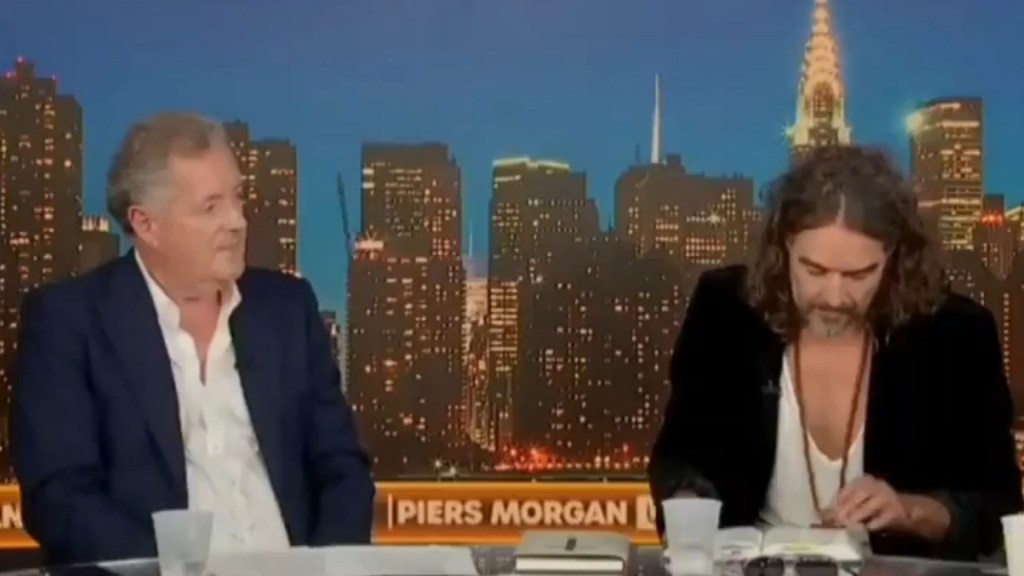
On the 24th of April, Piers Morgan did what effective live television has always done best. He asked a simple question and let the moment speak for itself.
Russell Brand, currently awaiting trial on multiple counts of rape and sexual assault, appeared on Piers Morgan Uncensored while promoting his renewed Christian faith. Brand had brought a Bible into court during proceedings, and Morgan asked him, calmly and directly, which passages had been meaningful to him that day.
What followed was nearly two minutes of Brand searching through the pages, muttering to himself, unable to find the verse. Morgan did not interrupt. The camera held and the silence did the work.
The clip travelled fast. Millions of views. Morgan himself said he had never had an interview clip that provoked so many memes. No confrontation, no theatrics. Just one well-placed question and the trust to let the audience draw their own conclusions. In an era of noise and overproduction, it was a reminder that restraint can still make for powerful television.
Russell Brand: Broadcast Bad
Brand had every opportunity to prepare for that moment. He brought the Bible himself to prove a point, and it ended up playing against him. He had been publicly discussing his faith for months, including writing a book on the subject. It was a sit-down interview on a platform he chose to appear on, with a host who had already spent much of the conversation questioning the sincerity of his journey from atheist to Buddhist to now devoted Christian. When Morgan then asked him to simply find the verse, the moment carried the full weight of everything that had come before it.
When you make faith, transformation or redemption the centrepiece of your public identity, you invite people to test whether it is real. If the symbol becomes the message, you need to know the symbol inside out.
Brand could not find the passage. Online, many concluded the Bible was more prop than text. Whether that is fair is almost beside the point. The perception formed instantly and travelled further than any clarification could follow.
Two days later, Brand posted a video on X. He had found the verse. Isaiah 43:18-19: “Forget the former things. Do not dwell on the past. See, I am doing a new thing.” He apologised for not finding it on the show, blaming the pressure of the moment.
It was a reasonable response. But in broadcast terms, the damage was already done. Morgan asked one question on a Friday. By Sunday the story had already written itself. That is the nature of live television. There is no such thing as a second take.
LOOKING AHEAD: MAY
And this is what we have to look forward to in May.
The local elections take place on the 7th, with results following on the 8th. Broadcast coverage will be heavily political across both days and broadcasters will be operating under election restrictions. If you’re planning non-political PR, this is a window to work around rather than into.
Mental Health Awareness Week also falls in May, bringing with it significant broadcast interest across news, features and lifestyle programming. Worth having a plan if it is relevant to your work.
Eurovision lands on the 15th. Strong territory for music, culture and commentary-led angles, and one of the few remaining moments where live television genuinely dominates the national conversation.
And towards the end of the month, the domestic football season wraps up alongside the UEFA Champions League Final. England and Scotland squad announcements are expected around the same time.